
Helping Innovators Incubate
The material-first partner for pellet-extrusion LFAM.
Interfacial — through its Infinite™ brand — partners with you from first print to full production.
Under its Infinite™ materials brand, Interfacial, a Nagase Group Company, develops and manufactures high-performance polymer compounds engineered for large format additive manufacturing. Whether one of our commercial grades fits, or you need a custom material built from the ground up, our team of PhD scientists and application engineers partners with you from first validation to commercial scale.
What is Infinite™?
Infinite™ is a line of glass-fiber-reinforced polymer pellets engineered by Interfacial (a Nagase Group company) for large-format additive manufacturing (LFAM), in four grades — PC-GF, rPC-GF (recycled PC), rPETG-GF (recycled PETG), and PC-GF-V0 (UL94 V-0 flame-rated) — for pellet-extrusion systems such as Thermwood LSAM and CEAD.

Why Infinite
Why engineers choose Infinite™ for LFAM
Six engineering wins that define LFAM-grade compounds — dialed into every Infinite™ pellet.
Featured Materials
Four purpose-built grades — pellets, ready to print.
Glass fiber–reinforced PC and PETG compounds, all supplied as pellets ready for pellet-extrusion LFAM systems.
All Infinite™ materials are manufactured using twin-screw extrusion compounding — the same platform used in development — so what you validate at trial scale is exactly what you receive at commercial volume.
At a glance: Infinite™ grade comparison
| Grade | Base Polymer | Recycled | Key Differentiator | Primary Applications |
|---|---|---|---|---|
| PC-GF | Virgin PC | — | High HDT, machinable | Aerospace tooling, industrial fixtures |
| rPC-GF | Recycled PC | Yes | Sustainable + high performance | Construction molds, ESG programs |
| rPETG-GF | Recycled PETG | Yes | Lower process temp, sustainable | Furniture, consumer goods tooling |
| PC-GF-V0 | Virgin PC | — | UL94 V-0 fire rating | Aerospace, fire-rated tooling |
Custom material development
Need a material that doesn’t exist yet?
Yes. We develop custom LFAM polymer compounds from requirements through commercial scale-up — backed by a PhD materials science team and 30+ patents.
Sometimes a commercial grade is the right starting point. Sometimes your application — a unique geometry, a demanding thermal environment, a regulatory requirement no off-the-shelf material can meet — calls for a compound built specifically for you.
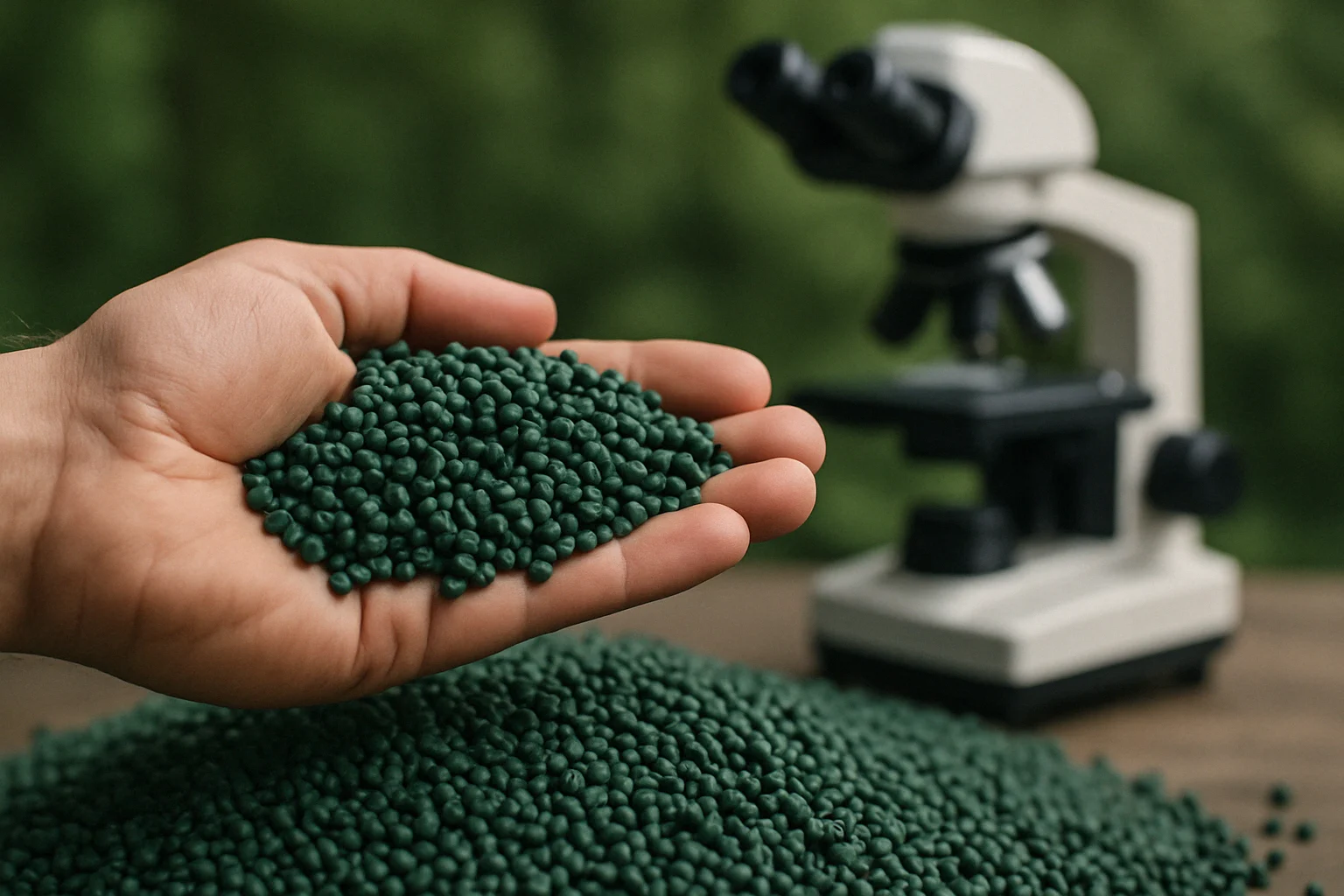
The engine of our development expertise
Lab to launch capabilities
Every stage in-house. Your timeline isn’t constrained by external bottlenecks.
From first formulation to production-scale supply, Interfacial provides the full capability stack internally.
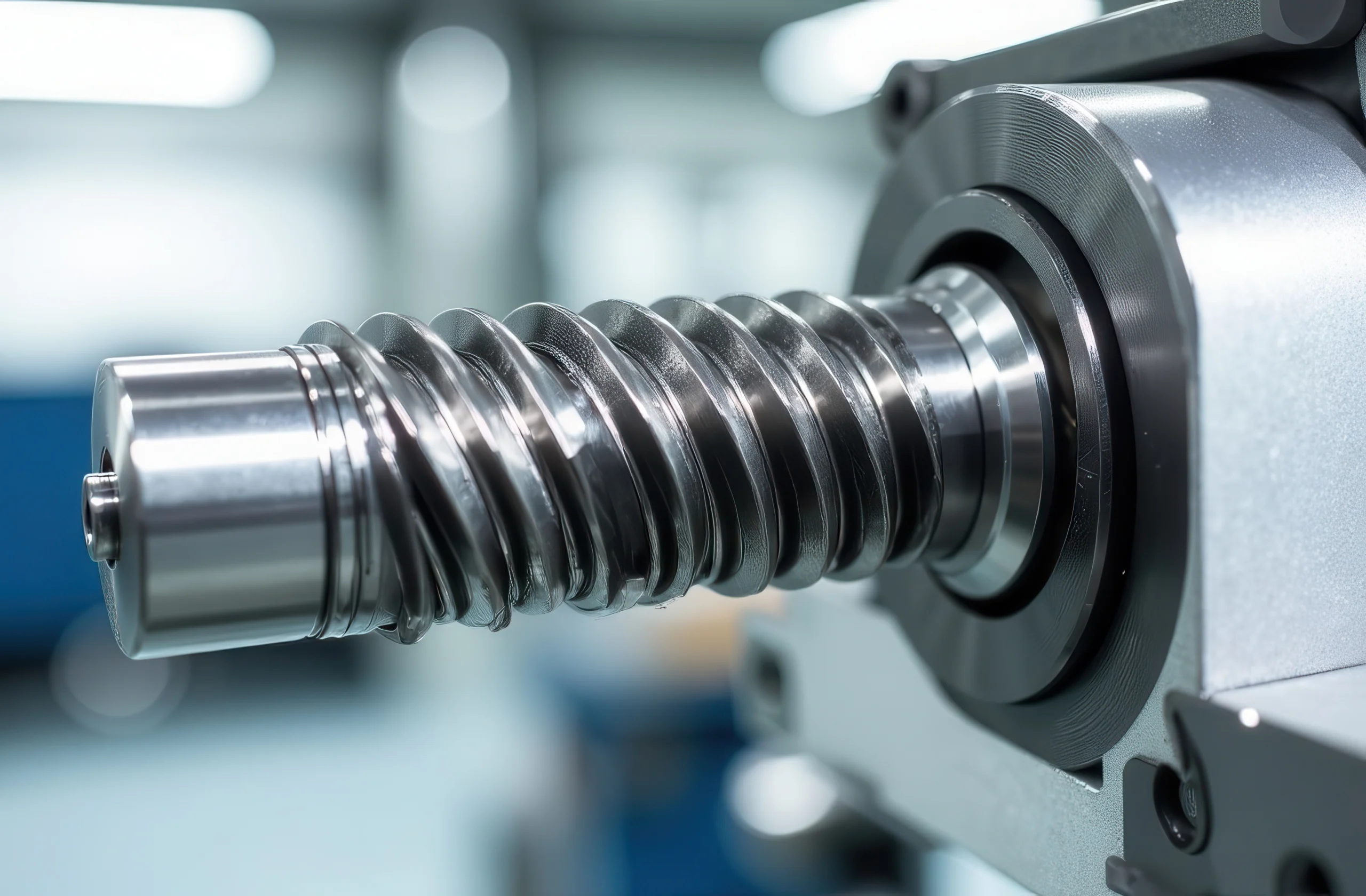
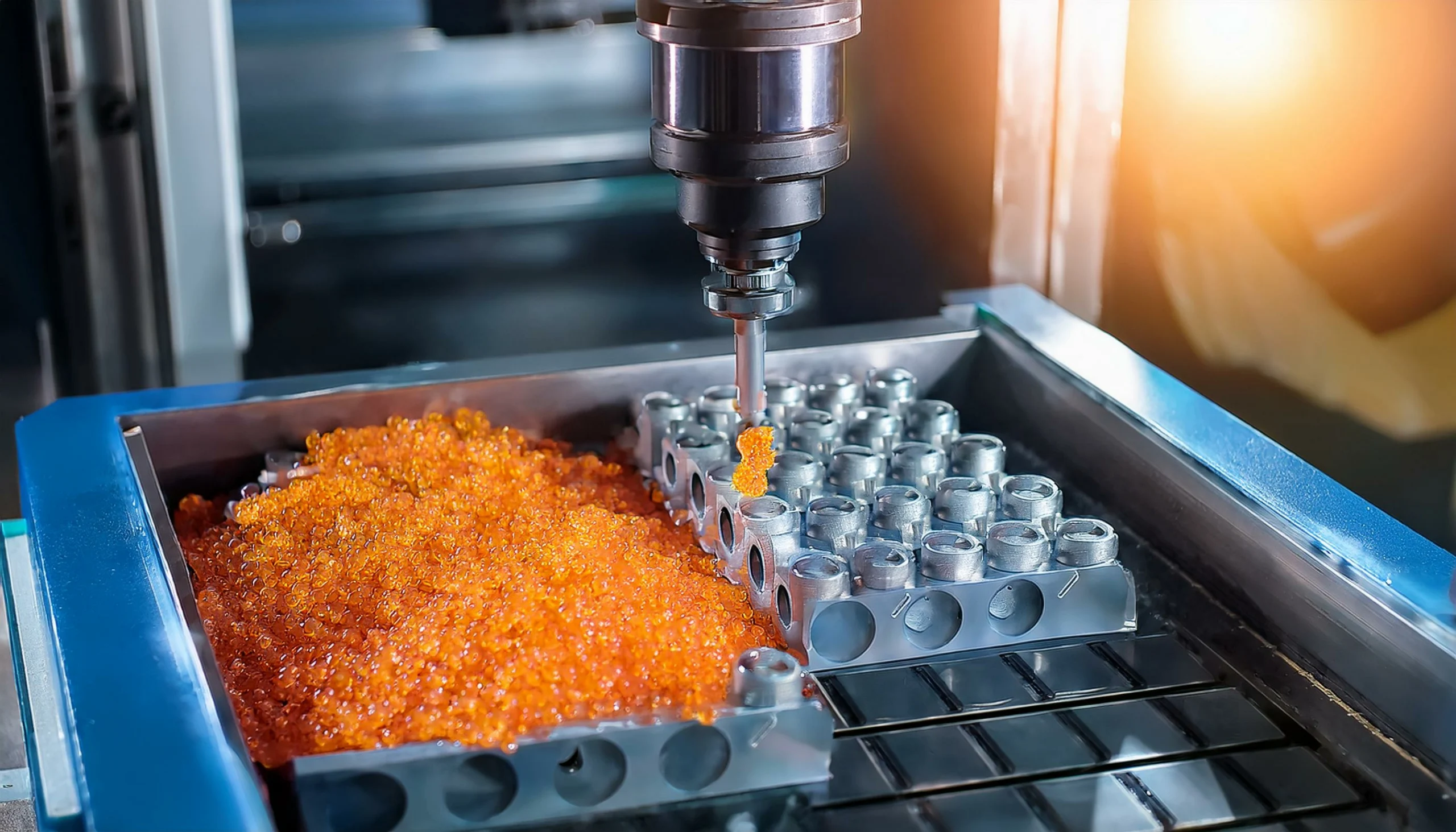
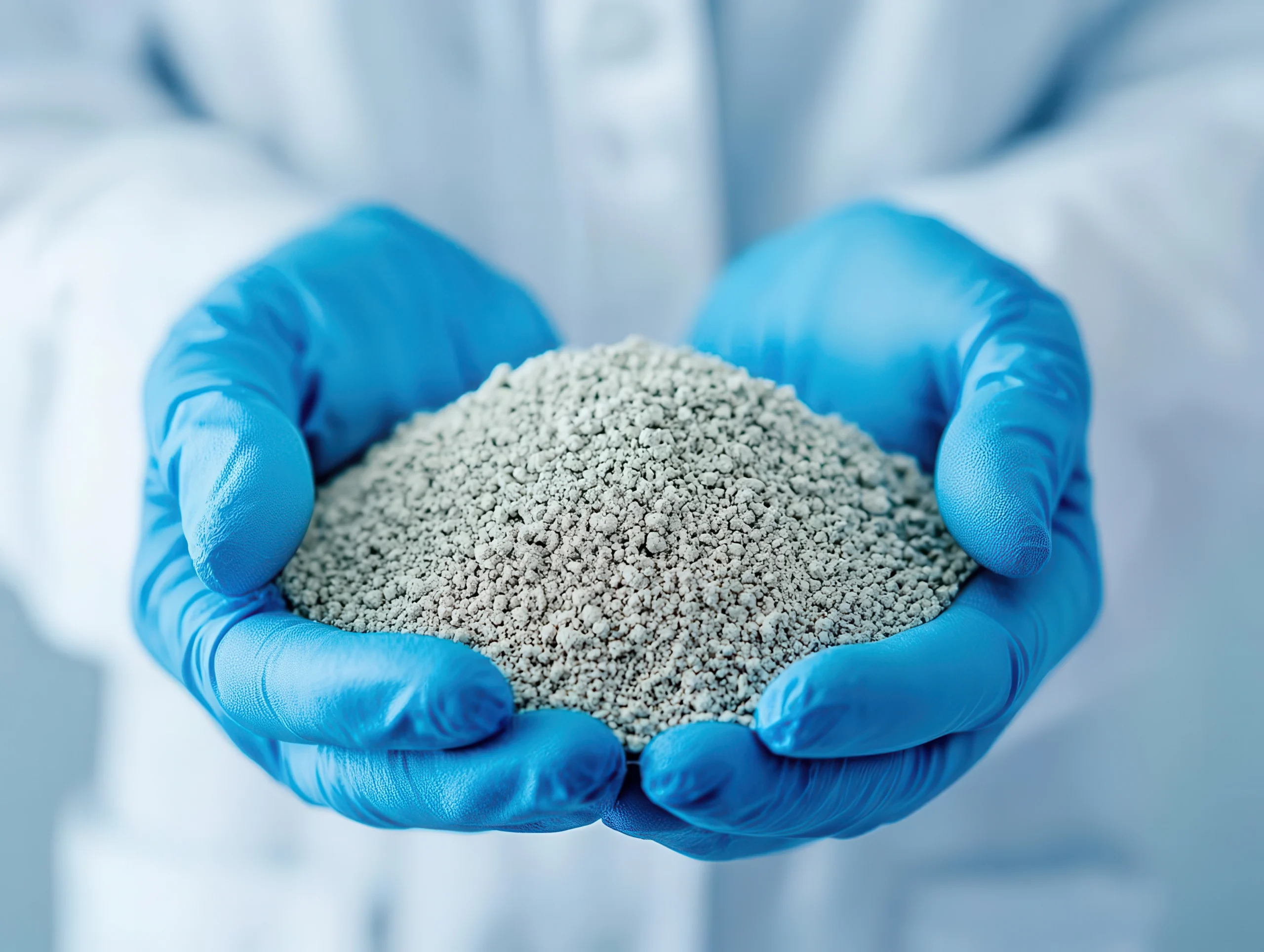
Manufacturing services
Industry leaders in scalable compounding & production.
40 million pounds per year across 8 twin-screw extruders — from 50 lb trial quantities to full commercial production, on the same platform, with CoA on every lot.
Technical Q&A
LFAM materials: your technical questions answered.
Direct answers to the questions engineers most commonly ask when evaluating LFAM compounds.
Long-term partner
A material company. Not a printer OEM.
Interfacial — material-focused, with PhD-level science, 30+ patents, and 40M lbs/year of production capacity behind every compound we ship.
Most LFAM ecosystem companies sell printers. Interfacial sells the material that goes into them — and backs it with the technical depth to help you succeed across the full workflow.
FAQ
Frequently Asked Questions
Infinite™ grades serve LFAM applications across construction, furniture, automotive, tooling, and molds — anywhere dimensional stability at scale matters. Every grade prints with low-to-zero warpage and without a heated chamber, broadening equipment compatibility. Grade selection maps to the requirement: PC-GF for stiff virgin polycarbonate (HDT ~125 °C); rPC-GF (HDT ~126 °C) and rPETG-GF for recycled-content / circular-manufacturing goals; and PC-GF-V0 where a UL94 V-0 flame rating is required (HDT ~123 °C). Recycled grades use recovered feedstocks with full technical support, and scrap from PC-GF and rPETG-GF can be granulated and reblended under quality controls.
Large-format 3D printing builds parts over long cycles, where unfilled polymers warp and drift dimensionally as they cool. Infinite™ pellets are reinforced with glass fiber, which lowers the polymer’s coefficient of thermal expansion (CTE) and controls warping and shrinkage across big parts. Every grade is validated on major pellet-extrusion platforms including Thermwood LSAM and CEAD, with platform-specific print parameters available from Interfacial’s applications engineers. Each lot is produced on the same twin-screw compounding line used for full production and ships with a Certificate of Analysis (CoA) covering MFI, tensile, flexural, and moisture specs. Customers can start with 50–500 lb trial quantities and scale to commercial volume on the identical platform — backed by a PhD materials-science team, 30+ patents, and 40 million pounds of annual capacity across 8 twin-screw extruders.
Interfacial operates 8 twin-screw extruders with a combined capacity of 40 million pounds per year, spanning lab-scale to full commercial-scale production.
Scrap from PC-GF and rPETG-GF grades can be granulated and reblended with prime material, subject to quality controls. Contact our team for a reprocessing protocol.
Every production lot is tested against a defined specification: MFI, tensile, flexural, and moisture content before release. Certificate of Analysis (CoA) documentation is available for every lot.
Yes. rPC-GF and rPETG-GF both incorporate recycled polymer feedstocks and are commercially available with full technical support.
Yes. Interfacial supports trial quantities of 50–500 lbs through the same twin-screw compounding platform used for commercial production.
Yes. Our team of PhD material scientists develops custom polymer compounds for applications that commercial grades cannot serve. The process follows 4 phases: requirements definition, formulation and lab screening, print validation, and scale-up to commercial production.
Both material and process factors contribute. Material causes include insufficient melt viscosity, pellet moisture creating voids, and fiber orientation disrupting bead contact. Process causes include low substrate temperature, excessive inter-layer time, and incorrect nozzle distance.
All four grades have been validated on Thermwood LSAM, CEAD, and other major pellet-extrusion platforms. Platform-specific print parameters are available from our applications engineering team.
Glass fiber reduces the coefficient of thermal expansion (CTE) of the base polymer, directly controlling warping and dimensional drift during long LFAM build cycles. Unfilled PC and PETG cause significant part distortion at large-format scale.
Four grades under the Infinite™ brand: PC-GF (glass-filled virgin polycarbonate), rPC-GF (glass-filled recycled polycarbonate), rPETG-GF (glass-filled recycled PETG), and PC-GF-V0 (glass-filled polycarbonate with UL94 V-0 fire rating). All supplied as pellets for pellet-extrusion LFAM systems.
Start a discussion
Reach Jonathan directly. Or start a project below.

N4660 1165th Street, Prescott, WI 54021
Mon–Fri · 8a–5p