
Helping Innovators Incubate
Specialty Materials
Interfacial’s Specialty Materials Division manufactures high value specialty compounds, masterbatches and micro-powders for innovation-minded customers. Our patented masterbatch technology enables unparalleled loading levels with high dispersion characteristics—often 90%+ by weight.
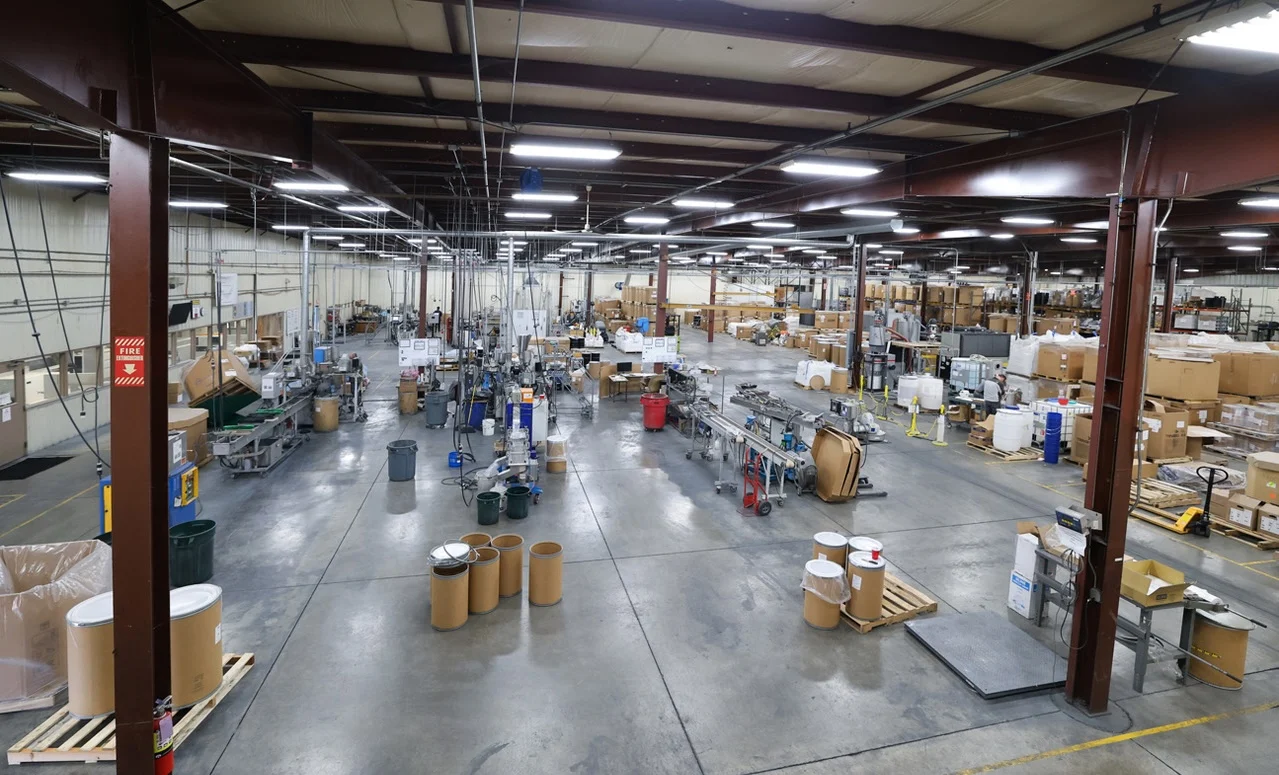
Based in River Falls, Wisconsin, we operate 87,000 sq. ft. of manufacturing space and a flexible twin screw strategy that supports rapid changeover and seamless scale-up from sample to pilot to production—up to truckload quantities. We boast 40 million pounds of annual production capacity to support the needs of our customers.
What is the Specialty Materials division?
Interfacial’s Specialty Materials Division manufactures high-value specialty compounds, masterbatches, and micro-powders from an 87,000 sq ft plant in River Falls, Wisconsin, with 40 million lbs/yr of capacity. Its patented liquid-dispersion masterbatch technology reaches industry-leading filler loadings — often 90%+ by weight — with high dispersion.
How We Manufacture
Our Process
A flexible manufacturing model designed for rapid changeover, seamless scale-up, and consistent production—from sample to pilot to full-scale production.
With 87,000 sq. ft. of manufacturing space in River Falls, Wisconsin, our Specialty Materials Division is built upon a flexible manufacturing strategy that allows for rapid changeover, seamless scale-up (sample-to-pilot-to-production) and machine-to-machine consistency. Our state-of-the-art twin screw equipment strategy is key to our proven success and growth, and we are proactive in our approach to facilities, staffing and equipment to meet the growth of our business and that of our customers.
Our Specialty Materials Division has state of the art manufacturing equipment and processes that enable flexible and responsive manufacturing for Interfacial’s many innovative customers. Our state-of-the-art twin screw manufacturing strategy allows us to move seamlessly between production of small batch niche compounds to truckload quantities for customers with larger scale market applications.
Over the past two years, our Specialty Material Division has increased its space in River Falls, Wisconsin to 87,000 sq. ft. and growing, and has invested significantly in additional equipment and capacity to meet our customers’ growing demand. We boast a talented team of engineers, operators and support staff who work effectively as a team to manufacture and deliver on customer-directed specifications and timelines.
Highly Filled Masterbatches
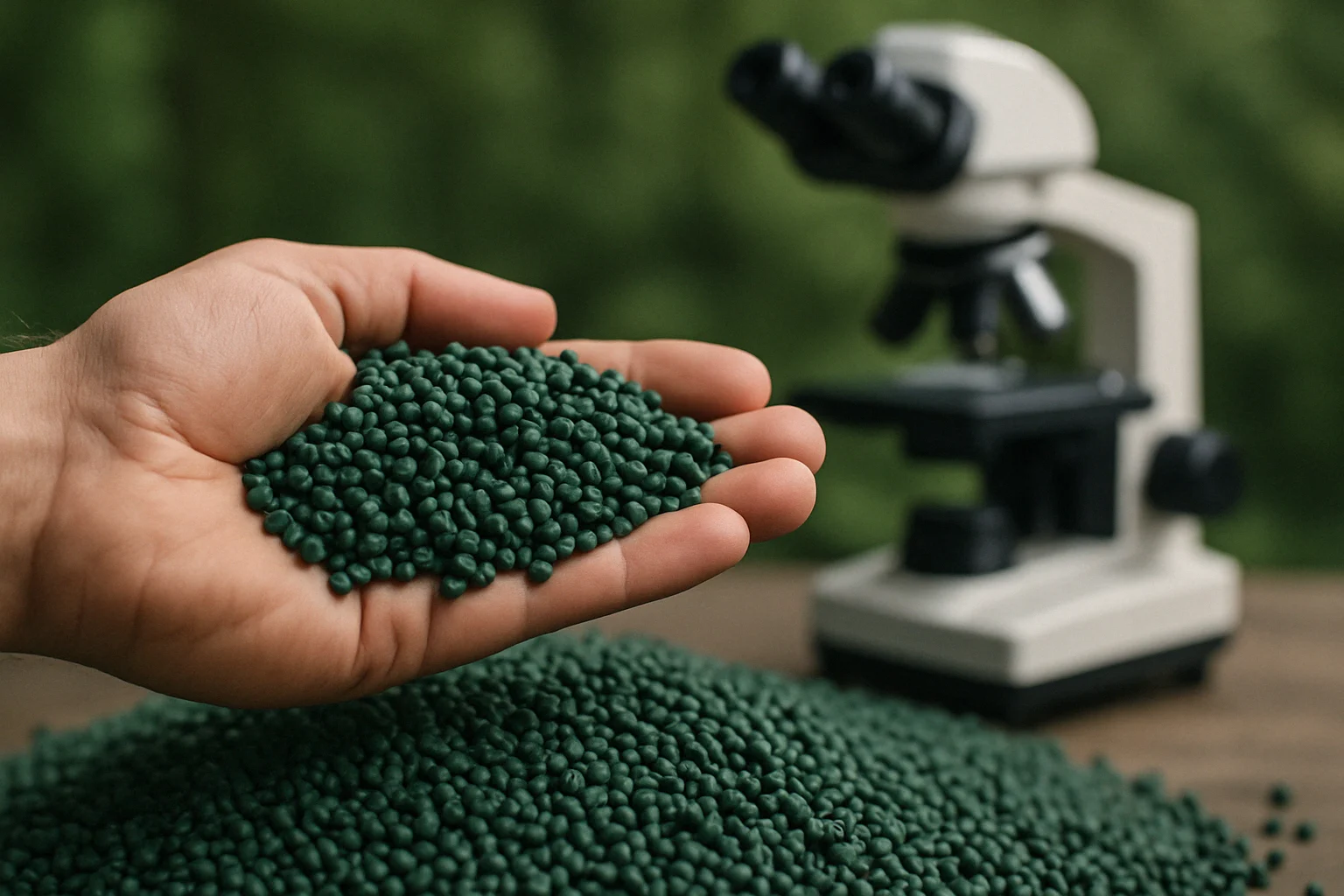
Enabled by our proprietary liquid dispersion technology, Interfacial has set a new standard for the development and production of the market’s highest filled masterbatches. Our process has three steps: pre-coating of mineral or filler, removal of liquid carrier and finally pelletization. The benefits to the customer are an easily dispersible pellet using conventional melt processing equipment and markedly increased processing output for the compounder (up to 100%). Another advantage of our masterbatches is our ability to highly load many difficult to handle materials such as carbon black, thermally conductive graphite, nano graphite, carbon nanotubes, talc and natural fibers.
Specialty Compounds
Interfacial has many years of experience developing high value compounds for an elite set of customers in the Medical, Consumer, Transportation and Building & Construction markets. As we have developed these novel compounds, we learned early that many of our customers came to depend on us to actually manufacture their compounds. Our focus has on niche applications (250 lbs annually or more) where there is need for very flexible manufacturing and assets, and the ability to turn around orders quickly. In recent times, we have continued to add manufacturing assets as our business grows, and in particular we are now fully capable of manufacturing in truckload quantities in order to meet specific needs of our customers.
Interfacial has developed a novel method for producing the market’s highest filled masterbatches (MBs). The process uses three steps: (1) pre-coating the mineral or filler, (2) removing the liquid carrier, and (3) pelletizing. Using this approach, Interfacial has designed, developed, and manufactured masterbatches with inorganic and organic fillers at 75 wt% to 95 wt% loading in polyolefin, polyamide, polyester, and other carrier resins.
A major additional benefit is converting typically difficult-to-handle powders into masterbatches that are safer, cleaner, and easier to use. This includes low bulk density conductive carbon blacks, nano and thermally conductive graphites, and carbon nanotubes. By densifying these powders into pellets—often referred to as “Clean Carbon”—throughput can increase because the pellets feed more like conventional masterbatches.
Transportation efficiency can also improve because the pellets are durable and can be shipped in large totes with less loss and mess. Interfacial has also demonstrated that its low-shear process can maintain the structure of conductive carbon black, supporting performance comparable to as-received powders.
Overall, this approach helps companies maintain cleaner facilities while reducing the risk of conductive materials causing issues with processing equipment.
Key advantages
Frequently Asked Questions
The division serves the automotive, consumer, and industrial markets with highly filled, well-dispersed masterbatches — including lightweighting (glass-microsphere masterbatches that cut specific gravity by more than 10%), electrical conductivity (carbon-nanotube masterbatches that reach percolation at low loadings, using roughly 10× less material than carbon black), and sustainable biocomposites (cellulose- and wood-filled).
Interfacial’s liquid-dispersion process concentrates very high filler loadings into an easily dispersible pellet in three steps: (1) pre-coat the mineral or filler with a liquid dispersion, (2) remove the liquid carrier, and (3) pelletize. It has produced commercial masterbatches at loadings such as 93 wt% talc, 93–95 wt% calcium carbonate, 90 wt% wood, 85 wt% cellulose fiber, and 37 wt% carbon nanotubes (versus ~15 wt% typical) in polyolefin, polyamide, polyester, and PVC carriers. The low-temperature method preserves heat-sensitive additives and eliminates shipping hazardous powders. With 20+ masterbatch and let-down products on the market, it is built for flexible niche runs (250 lbs/yr and up) scaling to full commercial production on the same River Falls assets.
Passionate – Dedicated – Professional
Start A Discussion With our Development Team